
In this guide
Have you ever wondered if stem toys truly make a difference in your child’s learning and playtime? You’re not alone.
With so many options out there, it’s easy to feel overwhelmed and unsure whether these toys are worth the investment. What if the right toy could spark creativity, build problem-solving skills, and keep your child engaged for hours? Keep reading to discover how stem toys might change the way your child learns—and why you might want to add them to your shopping list.
Benefits Of Stem Toys
STEM toys have become popular among parents and educators. They promise to educate and entertain children. But are they worth the investment? Exploring their benefits can help decide.
Boosting Creativity
STEM toys encourage kids to think creatively. They offer open-ended play. Children can build, experiment, and explore. This freedom sparks imagination. Kids learn to see things differently. Creativity is a skill used in many areas of life.
Enhancing Problem-solving Skills
These toys challenge children with puzzles and tasks. They must find solutions. This process improves problem-solving skills. Kids learn to analyze situations. They develop critical thinking. These skills are useful in everyday life and future careers.
Encouraging Hands-on Learning
STEM toys promote active learning. Children engage physically with the toys. This hands-on approach makes learning fun. It helps concepts stick. Kids understand better through doing. This method suits many learning styles. It keeps them interested and eager to learn.
Types Of Stem Toys
STEM toys come in various forms, each designed to spark curiosity and develop different skills. Understanding the types can help you choose the right toy that fits your child’s interests and learning style. Let’s look at some popular categories that make STEM learning both fun and effective.
Building Sets
Building sets are classic STEM toys that encourage creativity and problem-solving. They let kids construct structures, vehicles, or robots using interlocking pieces. A set like LEGO Technic challenges children to think about mechanics and engineering while they play.
These toys improve spatial awareness and fine motor skills. You might notice your child experimenting with different designs or figuring out how to make their creation stronger. Have you seen how a simple building block can turn into a complex machine with just a bit of imagination?
Coding Kits
Coding kits introduce kids to the basics of programming in a hands-on way. They often include interactive robots or games that respond to the commands your child writes. This direct feedback helps kids understand cause and effect and logical thinking.
For example, a kit like Osmo Coding combines physical blocks with tablet apps, making abstract concepts tangible. These kits grow with your child, offering beginner to advanced challenges. Could learning to code through play be the key to your child’s future success?
Science Experiment Toys
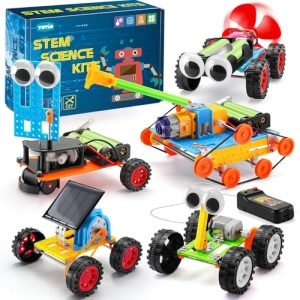
Science experiment toys let kids explore chemistry, physics, and biology through simple, safe experiments. Kits might include materials to grow crystals, build circuits, or test the properties of magnets. This hands-on approach makes science exciting and real.
When your child mixes chemicals or constructs a circuit, they’re not just following instructions—they’re discovering how the world works. These experiences often lead to questions and deeper investigation. What better way to inspire a lifelong interest in science than seeing it in action at home?
Age Appropriateness
Choosing the right STEM toys depends greatly on the child’s age. Age-appropriate toys ensure safety and keep children interested. Toys that match skills and interests encourage learning and creativity. Selecting suitable toys helps kids build confidence and enjoy the experience.
Toys For Toddlers
Toddlers need simple, safe toys with bright colors and big pieces. Toys that teach shapes, colors, and numbers work well. Building blocks and sorting toys develop fine motor skills and hand-eye coordination. Look for toys that encourage exploration without small parts.
Options For School-age Kids
Kids aged 5 to 10 enjoy toys that challenge their thinking. Science kits, simple robots, and coding games are great choices. These toys introduce basic concepts in fun ways. They also help improve problem-solving and creativity.
Advanced Kits For Teens
Teens want toys that match their growing skills and interests. Advanced robotics, electronics, and programming kits offer deeper learning. These kits often include real tools and complex instructions. They prepare teens for future STEM education and careers.

Credit: www.walmart.com
Cost Vs. Value
Balancing cost against value is a key question when deciding if STEM toys are worth it. You want to ensure that the money spent translates into meaningful benefits for your child’s learning and development. Understanding how price relates to the educational impact can help you make smarter choices that align with your goals and budget.
Price Ranges
STEM toys vary widely in price. You can find simple kits for under $20, while advanced robotics sets often cost over $200.
Lower-priced toys usually focus on basic skills like building or simple coding. Higher-end options offer more complex challenges, often with app integrations or multiple components.
Ask yourself: does the price match what your child will actually use? Sometimes a less expensive kit can spark interest just as well as a pricier one.
Long-term Educational Impact
STEM toys are designed to teach problem-solving, creativity, and critical thinking. These skills don’t just appear overnight; they develop over repeated play sessions.
Think about toys that can grow with your child. For example, a modular robotics set can start simple and become more complex as skills improve.
Have you noticed how your child’s curiosity deepens after exploring a toy beyond its basic function? This ongoing engagement adds real value beyond the initial cost.
Comparing To Traditional Toys
Traditional toys often focus on imaginative play but may lack structured learning elements.
STEM toys add an educational layer, encouraging kids to experiment, test hypotheses, and learn from failure. This hands-on learning can be more impactful than passive play.
Consider how a simple wooden block set compares to a STEM kit that teaches engineering concepts. Both can be fun, but the STEM toy offers skills that last a lifetime.
Is investing in STEM toys an expense or an investment in your child’s future? How do you weigh immediate cost against long-term benefits?
Parental Involvement
Parental involvement plays a key role in making STEM toys valuable for children. Parents help kids understand concepts and stay motivated. Active participation turns playtime into a learning opportunity. It also builds stronger bonds between parents and children. Engaged parents can guide kids through challenges and celebrate their successes. This support encourages curiosity and a love for learning. The role of parents shifts from teacher to playmate, making STEM activities more fun and effective.
How To Guide Play
Start by showing interest in the toy and its purpose. Ask simple questions to spark thinking, like “What do you think this part does?” Help children follow instructions if they get stuck. Use your own words to explain tricky ideas clearly. Encourage kids to try different ways of using the toy. Praise effort, not just correct answers. Keep the mood light and playful, avoiding pressure.
Encouraging Independent Exploration
Allow kids to experiment and make mistakes on their own. Give them space to explore without immediate help. Offer hints instead of solutions to boost problem-solving skills. Let children decide how to use the toy creatively. This freedom builds confidence and critical thinking. Keep tools and parts organized but easy to access. Watch quietly and step in only when needed.
Balancing Screen Time
STEM toys can reduce time spent on screens. Mix hands-on play with digital learning for variety. Set clear limits on daily screen use. Use STEM toys as a fun alternative to tablets or phones. Encourage outdoor STEM activities to add movement. Balance quiet, focused play with active, social time. This helps children develop healthy habits and diverse skills.

Credit: www.chicagotribune.com
Real-life Success Stories
Real-life success stories offer a powerful look into how STEM toys can impact children’s growth. These stories show tangible results, proving that STEM toys are more than just fun playthings. They help kids develop skills that extend beyond the toy itself, shaping their future.
Kids Who Excelled In Stem Fields
Many children who started with STEM toys have gone on to achieve impressive milestones in science, technology, engineering, and math. Take Sarah, who built her first robot at age 8 using a simple STEM kit. Today, she’s winning national robotics competitions and planning a career in engineering.
What if your child’s early exposure to STEM toys could spark a similar passion? These early experiences often lay the groundwork for confidence and curiosity in complex subjects.
Improved School Performance
Parents often report that STEM toys boost their children’s school performance, especially in math and science. By solving puzzles and building projects, kids improve critical thinking and problem-solving skills that translate to better grades.
One parent noticed her son’s math scores jumped significantly after he started playing with coding toys. The hands-on learning made abstract concepts easier to grasp, turning homework into an exciting challenge.
Testimonials From Parents
- “My daughter’s creativity and focus improved so much after she started using STEM kits. She’s more interested in her science class now.”
- “STEM toys helped my son learn to work patiently and think logically. It’s amazing to see him enjoy learning this way.”
- “We saw real changes in our child’s confidence and independence. STEM toys gave her a sense of accomplishment.”
Have you noticed similar changes in your child’s learning habits? These testimonials highlight how STEM toys can create lasting positive effects beyond playtime.
Choosing The Right Stem Toy
Choosing the right STEM toy is key to making learning fun and effective. The perfect toy matches the child’s age, skills, and curiosity. A good STEM toy sparks creativity and builds problem-solving skills. Parents and educators should consider several factors to pick the best option for kids.
Assessing Interests
Start by thinking about the child’s interests. Some kids love robots, others enjoy building or coding. Choosing a toy that fits their passion keeps them engaged longer. Observe what types of activities the child enjoys most. Ask what they like about science or math. This helps find a toy that feels exciting, not like a chore.
Safety Considerations
Safety is critical when selecting STEM toys. Check the recommended age range to ensure the toy is appropriate. Avoid small parts for younger kids to prevent choking hazards. Look for non-toxic materials and sturdy design. Review product labels and certifications for safety standards. A safe toy lets kids explore without risk or worry.
Durability And Quality
Choose toys made from strong, durable materials. Kids can be rough with toys, so quality matters. Look for well-made parts that fit securely and last long. Read reviews to learn about the toy’s build and lifespan. A durable toy provides more value and encourages repeated play. It also supports deeper learning through extended use.

Credit: littlepartners.com
Frequently Asked Questions
What Are Stem Toys And How Do They Work?
STEM toys focus on science, technology, engineering, and math concepts. They use hands-on play to teach problem-solving and critical thinking skills effectively.
Do Stem Toys Improve Children’s Learning Abilities?
Yes, STEM toys enhance cognitive skills, creativity, and logical thinking. They encourage curiosity and help kids understand complex concepts through interactive play.
Are Stem Toys Suitable For All Age Groups?
STEM toys come in various difficulty levels, making them suitable for toddlers to teenagers. Age-appropriate toys ensure safe, engaging, and educational experiences for every child.
How Do Stem Toys Benefit Future Career Skills?
STEM toys build foundational skills like coding, engineering, and analysis. These skills prepare children for high-demand careers in technology and science fields.
Conclusion
STEM toys can help children learn important skills. They encourage problem-solving and creativity. Kids enjoy building and experimenting with these toys. Parents often see their children become more curious. These toys make learning fun and hands-on. Not every toy suits every child’s interest.
Choosing the right STEM toy matters a lot. They can support school subjects like math and science. Overall, STEM toys offer useful learning chances. They are worth considering for young minds.