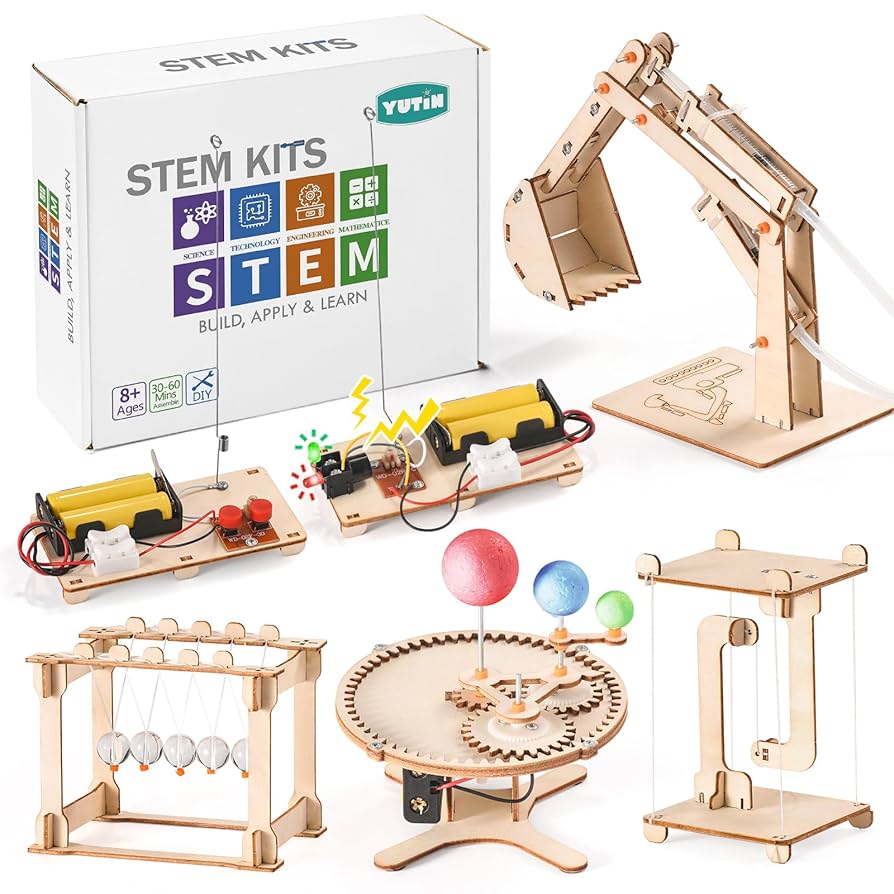
Have you ever wondered how to make learning science, technology, engineering, and math fun and hands-on? A STEM kit might be just what you need.
It’s a simple, ready-to-use package designed to help you explore these exciting subjects through experiments and projects. Whether you’re a student, a parent, or just curious, understanding what a STEM kit is can open new doors for your creativity and knowledge.
Keep reading to discover how these kits work and why they could be a game-changer for your learning experience.

Credit: www.amazon.com
What Stem Kits Are
Stem Kits are educational tools that help children learn science, technology, engineering, and math. These kits provide hands-on experiences that make learning fun and interactive. They encourage creativity and problem-solving skills in young minds. Stem Kits come with various components and instructions to build projects. They cater to different age groups and skill levels, making them accessible to all learners.
Core Components
Stem Kits usually include basic parts needed for experiments. These components can be wires, gears, sensors, and motors. Some kits may have computer chips or software for programming. Instructions and manuals guide users through each step. They ensure a clear understanding of concepts. A well-designed kit makes learning engaging and effective.
Types Of Stem Kits
There are various types of Stem Kits available. Robotics kits allow building and programming robots. Chemistry kits introduce basic chemical reactions. Engineering kits focus on structures and mechanics. Math kits teach numbers and calculations. Each type targets specific skills and interests. Selecting the right kit can enhance learning experiences.
Age Groups And Skill Levels
Stem Kits are designed for different age groups. Kits for young children often have simple projects. They focus on basic concepts with colorful parts. Kits for older children include complex projects. They require more critical thinking and problem-solving. Instructions are tailored to match skill levels. This ensures learners can progress and enjoy challenges. Choosing the right kit for the age group is essential.
Benefits Of Stem Kits
STEM kits offer many benefits for learners of all ages. They make science, technology, engineering, and math fun and hands-on. These kits help build important skills that last a lifetime. Using a STEM kit encourages active learning and exploration. Kids and adults alike can gain confidence through practical experience.
Enhancing Creativity
STEM kits inspire users to think creatively. Building and experimenting sparks new ideas. Users learn to design and innovate with their own hands. This process helps develop original thinking. Creativity grows as people try different solutions and approaches.
Improving Problem-solving Skills
Working with STEM kits challenges the mind to solve problems. Users face real-world challenges that need critical thinking. They learn to analyze, test, and adjust their work. This practice strengthens logical reasoning and decision-making. Each success builds confidence in tackling new problems.
Encouraging Collaboration
Many STEM kits are perfect for group activities. They promote teamwork and communication skills. Sharing ideas and working together leads to better results. Collaboration teaches patience and respect for others’ views. Group projects make learning social and enjoyable.
How To Choose A Stem Kit
Choosing the right STEM kit is key to a fun and educational experience. It depends on what you want to learn, the age of the user, and the quality of the kit. These points help narrow down the best option.
Identifying Learning Goals
Think about what skills or topics the kit should cover. Some kits focus on coding, others on engineering or science experiments. Decide if the goal is to build problem-solving skills, creativity, or knowledge in a specific area.
Clear goals help pick a kit that matches interests and learning needs. This ensures the experience stays engaging and useful.
Considering Age Appropriateness
Check the recommended age on the kit packaging. Kits for younger kids have simpler instructions and safer parts. Older kids can handle more complex projects.
Choosing an age-appropriate kit prevents frustration or boredom. It also ensures safety and better learning outcomes.
Budget And Quality Factors
Compare prices but focus on quality too. Cheaper kits might lack durable parts or clear instructions. A well-made kit lasts longer and offers a better experience.
Look for kits with good reviews and known brands. Think about what fits your budget without sacrificing learning value.
Popular Stem Kit Categories
STEM kits come in many types, each designed to spark curiosity and build skills in different areas. Knowing the popular categories helps you pick the best kit for your interests or goals. Whether you want to code, build, or experiment, there’s a kit that fits your style.
Robotics Kits
Robotics kits bring machines to life. You get parts like motors, sensors, and controllers to build robots that can move and interact with their environment. These kits often include step-by-step instructions, but you can also experiment by tweaking your designs.
Have you ever wondered what it feels like to create a robot that can follow your commands? Robotics kits give you that hands-on experience, teaching problem-solving and mechanical skills along the way.
Coding And Electronics Kits
Coding and electronics kits focus on programming and circuits. They usually contain microcontrollers, LEDs, wires, and other components to create interactive projects. Learning to code with these kits builds logical thinking and opens doors to technology careers.
Imagine writing a simple program that controls a light or a buzzer. These kits make abstract coding concepts real and exciting, helping you understand how software controls hardware.
Science Experiment Kits
Science experiment kits cover a wide range of topics like chemistry, physics, and biology. They provide materials and instructions to conduct experiments safely at home. These kits encourage curiosity and teach the scientific method through hands-on discovery.
What better way to learn about chemical reactions than mixing safe ingredients and seeing the results yourself? These kits turn science from a theory into a thrilling experience.
Engineering And Building Kits
Engineering and building kits focus on construction and design. You use gears, beams, and connectors to create structures or machines. These kits develop spatial awareness, creativity, and mechanical understanding.
Have you tried building a bridge or a crane with your own hands? Engineering kits challenge you to think critically about stability and function, making your creations both fun and educational.
Tips For Effective Stem Learning
Effective STEM learning depends on creating the right environment and approach. It encourages curiosity and builds problem-solving skills. Simple tips can make STEM activities more fun and educational. Focus on guiding, not controlling, and allow space for creativity.
Setting Up A Learning Space
Choose a quiet, well-lit area for STEM activities. Keep tools and materials organized and easy to reach. Use a table with enough space for projects and experiments. Remove distractions to help focus on tasks. Add storage containers to keep the space tidy and safe.
Guiding Without Taking Over
Ask questions that make learners think and explore ideas. Offer hints instead of full answers to boost confidence. Let learners try different solutions and learn from mistakes. Praise effort and creativity, not just correct results. Stay patient and encourage a positive attitude toward challenges.
Encouraging Exploration
Provide a variety of materials to spark imagination. Allow time for free play and open-ended experiments. Support learners in testing their own ideas and hypotheses. Celebrate discoveries and new ways of thinking. Use real-world examples to show how STEM applies to daily life.

Credit: www.amazon.com.mx
Where To Buy Stem Kits
Finding the right place to buy STEM kits is important. These kits make learning science, technology, engineering, and math fun and easy. Many places sell STEM kits, each with different choices and prices. Here are some good places to buy STEM kits for kids and learners of all ages.
Online Retailers
Online stores have a wide selection of STEM kits. You can find kits for different ages and skill levels. Many websites offer detailed descriptions and customer reviews. Shopping online is easy and quick. Popular sites include large marketplaces and specialized STEM shops. You can compare prices and find deals without leaving home.
Educational Stores
Stores focused on education often carry STEM kits. These shops cater to teachers, parents, and schools. They provide high-quality kits that meet learning standards. Staff can help you choose kits based on age and interest. Visiting these stores gives a chance to see the kits before buying. They often have kits not found in general stores.
Community And School Programs
Some community centers and schools offer STEM kits to students. These programs support hands-on learning in classrooms and clubs. They may loan or sell kits at lower prices. Joining a STEM club or class can provide access to kits and guidance. This option helps learners explore STEM with support from teachers and peers.

Credit: www.amazon.com
Frequently Asked Questions
What Is Included In A Typical Stem Kit?
A typical STEM kit includes tools, materials, and instructions for science, technology, engineering, or math projects. It encourages hands-on learning, creativity, and problem-solving skills. Kits often contain building blocks, circuits, sensors, and educational guides.
How Does A Stem Kit Benefit Children’s Learning?
STEM kits promote critical thinking, creativity, and practical skills. They help children understand complex concepts through interactive experiments. This hands-on approach boosts confidence and encourages interest in science and technology fields.
Are Stem Kits Suitable For All Age Groups?
Yes, STEM kits are designed for various age groups, from preschoolers to teens. Kits vary in complexity, ensuring age-appropriate challenges. Choosing the right kit helps maximize learning and engagement for different skill levels.
Can Stem Kits Improve Problem-solving Skills?
Absolutely. STEM kits encourage trial and error, experimentation, and logical thinking. These activities strengthen problem-solving abilities by teaching how to analyze and resolve challenges effectively.
Conclusion
A STEM kit helps learners explore science and technology hands-on. It makes learning fun and practical. Kids and adults both can benefit from using these kits. They build skills in problem-solving and creativity. STEM kits also encourage curiosity and teamwork.
Trying one can spark interest in future careers. Simple tools and clear instructions guide users well. Overall, STEM kits offer a great way to learn outside the classroom. Give it a try and see the difference yourself.