
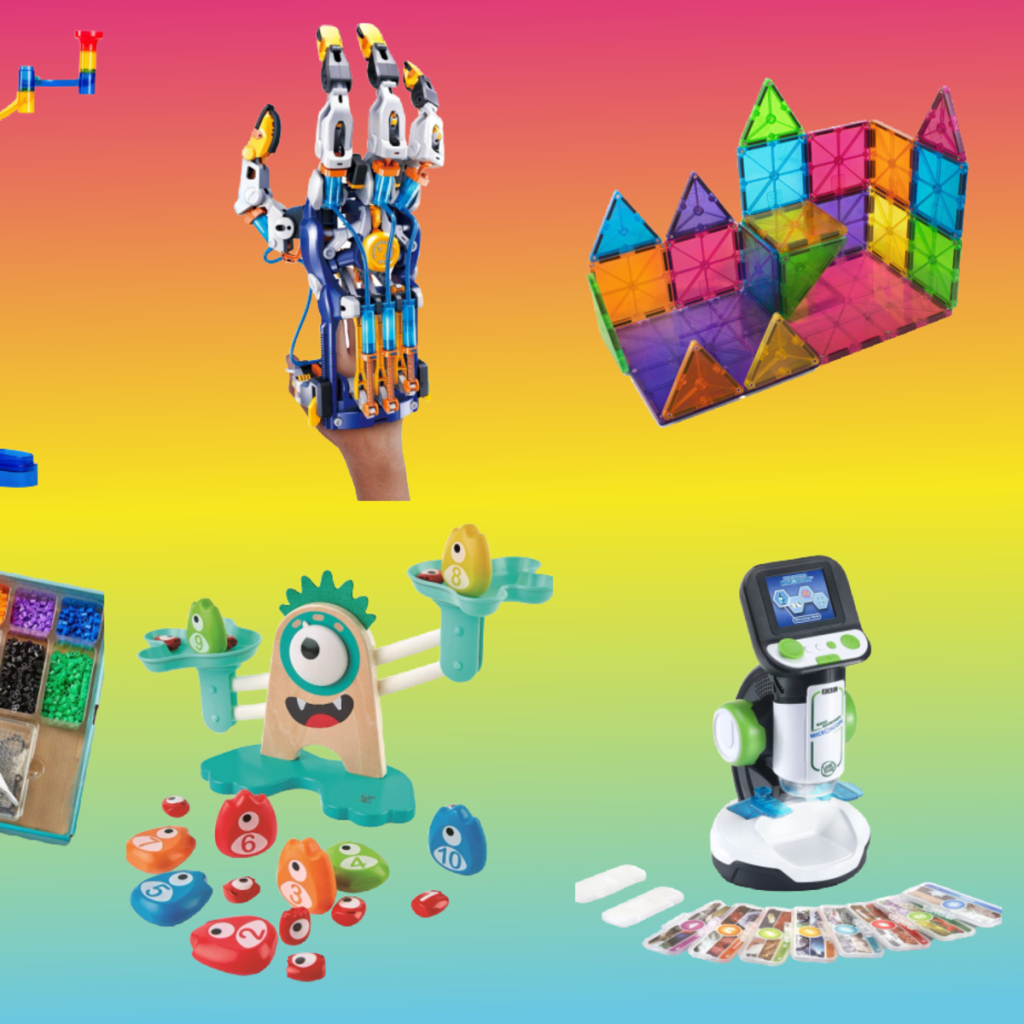
In this guide
Are you looking for toys that do more than just entertain? Stem toys could be exactly what your child needs to spark creativity and boost learning.
These toys make science, technology, engineering, and math fun and hands-on. But with so many options out there, how do you choose the best ones? Keep reading, and you’ll discover top picks that can help your child develop important skills while having a great time.
Your search for the perfect STEM toy ends here!
Benefits Of Stem Toys
Stem toys offer incredible benefits for children’s development. They are designed to enhance cognitive abilities and foster essential skills. These toys integrate science, technology, engineering, and mathematics, making learning fun and interactive. They not only entertain but also educate, preparing kids for future challenges.
Boosting Problem-solving Skills
Stem toys challenge children to think critically. They require kids to solve puzzles and overcome obstacles. This develops their ability to find solutions independently. It enhances their analytical thinking and boosts confidence.
Encouraging Creativity
These toys spark imagination. Children can build, design, and innovate. Stem toys provide tools for creative expression. They encourage kids to think outside the box and explore new ideas.
Enhancing Fine Motor Skills
Manipulating small parts improves hand-eye coordination. Stem toys often involve building and assembling. This enhances dexterity and precision. Children develop better control and coordination through play.
Promoting Teamwork And Collaboration
Stem toys often involve group activities. They teach children to work together. Kids learn the importance of communication and collaboration. These skills are crucial for success in any field.

Credit: www.chicagotribune.com
Criteria For Choosing Stem Toys
Choosing the best STEM toys requires careful thought. These toys should support learning and spark curiosity. The right toy fits the child’s age and grows with them. Safety and durability protect children during play. Fun and challenge keep kids interested longer. Consider these key points to find the best STEM toys.
Age Appropriateness
Choose toys that match the child’s age and skills. Toys too hard cause frustration. Toys too easy lose interest. Age labels on packages help guide choices. Consider the child’s development stage. This ensures the toy teaches well and is safe.
Educational Value
Look for toys that teach important STEM ideas. Toys should explain science, technology, engineering, or math concepts. Hands-on learning helps children understand better. Toys with clear instructions or challenges boost learning. A good STEM toy encourages problem-solving and creativity.
Durability And Safety
Check that toys are made of strong, safe materials. Toys should handle rough play without breaking. Avoid small parts for young children to prevent choking. Non-toxic materials protect health. Sturdy toys last longer and offer better value.
Engagement And Replayability
The best STEM toys keep kids interested over time. Toys with different levels or multiple uses add replay value. They encourage kids to try new ideas and build skills. Bright colors and fun designs increase attraction. Toys that grow with the child offer lasting fun.
Top Stem Toys For Toddlers
Choosing the right STEM toys for toddlers can shape their curiosity and problem-solving skills from an early age. These toys should be simple enough to hold their attention but challenging enough to spark learning. Let’s look at some top options that balance fun and education perfectly for your little one.
Building Blocks And Puzzles
Building blocks and puzzles are timeless tools for learning. They encourage toddlers to think about shapes, sizes, and spatial relationships. When my niece first started stacking colorful blocks, I saw her figuring out balance and coordination without even realizing it.
Look for sets that offer various shapes and colors to boost creativity. Puzzles with large pieces and simple patterns help toddlers develop problem-solving skills and hand-eye coordination. Have you noticed how your child reacts when they complete a puzzle? That sense of achievement is powerful for building confidence.
Simple Coding Games
Simple coding games introduce toddlers to the basics of logic and sequencing without screens. These games often use physical pieces like cards or blocks to create patterns or follow instructions. Watching kids sort through steps to complete a sequence is like seeing their brain light up.
Choose games that allow your toddler to experiment with cause and effect. Some toys use arrows or symbols to guide a robot’s movements, which teaches planning and critical thinking. Can you imagine how these early lessons might prepare your child for more complex tasks later on?
Interactive Shape Sorters
Interactive shape sorters are fantastic for developing fine motor skills and shape recognition. They encourage toddlers to match shapes and colors while engaging with tactile feedback like sounds or lights. My son’s favorite shape sorter made a cheerful noise every time he found the right spot, which kept him coming back for more.
Look for ones that offer multiple levels of difficulty to grow with your child. These toys also promote patience and focus as toddlers try different shapes in various slots. What new skills could your child discover by playing with an interactive sorter today?

Credit: piccalio.com
Best Stem Toys For Preschoolers
Choosing the best STEM toys for preschoolers can set a solid foundation for lifelong learning. At this early age, toys that spark curiosity and encourage hands-on play are key. You want options that are simple enough to understand but rich enough to challenge young minds.
Basic Robotics Kits
Basic robotics kits help kids learn how things move and work together. These kits often include large, colorful pieces that snap together easily, perfect for small hands. Your child can build simple robots and see cause and effect in action, which makes learning fun and interactive.
Some kits come with buttons to press or wheels to turn, teaching early coding concepts without screens. Have you noticed how kids light up when they see their creation move? That excitement is a powerful learning tool.
Science Experiment Sets
Science experiment sets open up a world of discovery right at home. They often include safe, basic materials for mixing, pouring, and observing reactions. These sets encourage asking questions like “What happens if I mix these colors?” or “Why does this bubble form?”
You can watch your preschooler’s eyes widen as they see everyday science in action. The hands-on experiments make abstract concepts more concrete, giving your child a sense of control and achievement.
Math And Pattern Games
Math and pattern games build early number sense and logical thinking. These toys often involve sorting shapes, matching colors, or creating sequences. They help kids recognize patterns, an essential skill for problem-solving later on.
Games with colorful blocks or cards encourage your child to explore math concepts through play. Have you tried turning a pattern game into a friendly competition? It can boost engagement and reinforce learning effortlessly.
Popular Stem Toys For School-age Kids
Popular STEM toys for school-age kids spark curiosity and build skills that last a lifetime. These toys challenge young minds while making learning fun and interactive. You’ll find options that fit different interests and abilities, helping your child dive into science, technology, engineering, and math through hands-on play.
Advanced Robotics And Coding Kits
Robotics and coding kits let kids create real, moving machines and write the code that controls them. These kits often include user-friendly software, making it easier for beginners to get started with programming. Watching a robot respond to commands gives a sense of accomplishment and shows how coding powers technology in daily life.
Consider kits like LEGO Mindstorms or the Makeblock mBot. They offer expandable systems that grow with your child’s skills. How might your child’s confidence in problem-solving change after building their own robot?
Engineering Construction Sets
Engineering sets provide pieces to build bridges, vehicles, and other structures. They teach principles of design, balance, and mechanics through trial and error. Kids quickly learn which structures hold up and which ones collapse, turning playtime into a practical lesson.
Brands like K’NEX and Magna-Tiles are favorites because they encourage creativity alongside engineering basics. What structures would your child design if they had unlimited pieces and freedom?
Electronics And Circuit Boards
Electronic kits introduce kids to circuits, sensors, and basic electronics components. These kits help demystify how everyday gadgets work by letting kids build their own devices. Experimenting with lights, buzzers, and sensors makes abstract concepts tangible.
Look for kits such as Snap Circuits or littleBits, which use snap-together parts for easy assembly. How might understanding circuits inspire your child’s interest in inventing new devices?

Credit: www.amazon.ae
Tech-savvy Stem Toys
Tech-savvy STEM toys bring a whole new level of excitement and learning to children. They combine hands-on play with modern technology, making education feel like an adventure. If you want your child to enjoy learning while mastering tech skills, these toys are a perfect fit.
App-integrated Learning Tools
App-integrated STEM toys connect physical play with digital apps, offering interactive lessons and challenges. These tools adapt to your child’s pace, providing personalized feedback that helps them improve. For example, coding kits with companion apps let kids write real code and see immediate results, keeping their interest alive.
Think about how much more engaged your child could be when the toy responds to their actions through a tablet or smartphone. This integration makes learning feel less like a chore and more like a game. Have you noticed how kids quickly pick up tech skills when they see instant feedback?
Augmented Reality Kits
Augmented reality (AR) kits blend physical objects with digital information, creating an immersive learning experience. Kids can point a device at a model or card and watch it come to life on the screen, revealing hidden facts or guiding them through experiments.
This hands-on yet high-tech approach helps kids understand complex concepts by visualizing them in 3D. Imagine your child exploring the solar system or dissecting a virtual frog without any mess. How might this visual and interactive method change your child’s curiosity about science?
Programmable Drones And Robots
Programmable drones and robots teach coding and engineering through play. Children learn to write simple commands that control the movements and actions of these devices, fostering problem-solving and logical thinking.
These toys also encourage creativity. Your child can design obstacle courses or missions, turning coding into a playful challenge. Wouldn’t it be exciting to watch your kid’s robot navigate a path they created, all by following their own instructions?
Tips For Maximizing Stem Play
Maximizing STEM play is about more than just handing over the latest educational toy. The way you set up the experience can make a huge difference in how much your child learns and enjoys the activity. Small changes in your approach can spark curiosity and build lasting skills.
Creating A Supportive Environment
Your role as a guide matters. Set up a space where your child feels safe to make mistakes and try again. A clutter-free, well-lit area with easy access to materials encourages focus and creativity.
Try adding labels or simple instructions near the toys to help your child navigate challenges without frustration. This kind of setup reduces interruptions and keeps the learning flow steady.
Encouraging Open-ended Exploration
Let your child take the lead in how they use the toys. Instead of showing them exactly what to do, ask questions like, “What happens if you connect these pieces differently?”
This approach helps develop problem-solving skills and imagination. You might be surprised at the unique solutions your child comes up with when given freedom.
Balancing Screen Time And Hands-on Activities
STEM toys often come with digital apps or instructions, but hands-on play should remain the priority. Set clear limits on screen use to keep children engaged with physical materials.
Try pairing screen time with a hands-on challenge immediately after, like building a model based on what they saw on the app. This balance deepens understanding and keeps play dynamic.
Frequently Asked Questions
What Are The Benefits Of Stem Toys For Kids?
STEM toys boost critical thinking, creativity, and problem-solving skills. They make learning fun and engaging. Kids develop interest in science, technology, engineering, and math early on, preparing them for future careers.
Which Age Group Are Stem Toys Best Suited For?
STEM toys are designed for all ages, from toddlers to teens. Choose toys based on a child’s developmental stage and interests. Early exposure helps build foundational skills and keeps older kids challenged.
How Do Stem Toys Improve Learning At Home?
STEM toys encourage hands-on learning and exploration. They foster curiosity and independent thinking. Parents can support skill development by guiding play and discussing scientific concepts in daily activities.
Are Stem Toys Suitable For Both Boys And Girls?
Yes, STEM toys are gender-neutral and encourage equal participation. They help break stereotypes by inspiring all children to explore science and technology. Inclusive play promotes confidence and diversity in STEM fields.
Conclusion
Choosing the best STEM toys helps children learn and have fun. These toys build skills like problem-solving and creativity. Kids stay curious and enjoy hands-on play. Parents and teachers can support learning with great toy choices. The right STEM toys make learning feel like an adventure.
Give children tools to explore science, technology, engineering, and math. Simple toys can spark big ideas. Start early and watch young minds grow.