Have you ever wondered why Montessori toys are becoming so popular among parents and educators? These toys are not just ordinary playthings—they are carefully designed to help your child learn and grow in a natural, fun way.
If you want to give your child the best start, understanding what Montessori toys are and how they work can make a big difference. Keep reading, and you’ll discover how these simple yet powerful tools can unlock your child’s creativity, focus, and independence like never before.

Credit: www.amazon.com
Montessori Toy Basics
Montessori toys are designed to support a child’s natural learning process. They focus on encouraging exploration and creativity. These toys help children develop various skills through hands-on play. Understanding the basics of Montessori toys can guide parents and educators in choosing the right tools for learning.
Origin And Philosophy
Montessori toys come from the Montessori education method. Dr. Maria Montessori created this approach in the early 1900s. She believed children learn best by doing things themselves. The philosophy values independence and respect for a child’s pace. Toys are tools that promote self-directed learning and discovery.
Key Characteristics
- Simple and natural materials like wood and fabric
- Designed to develop specific skills such as fine motor or sensory
- Encourage problem-solving and creativity
- Promote concentration and focus
- Open-ended use, allowing multiple ways to play
- Safe and durable for repeated use

Credit: www.tinylandus.com
Types Of Montessori Toys
Montessori toys are designed to support your child’s natural desire to learn through hands-on play. These toys are simple, purposeful, and encourage independence. Understanding the different types can help you choose the right tools to boost your child’s development effectively.
Wooden Toys
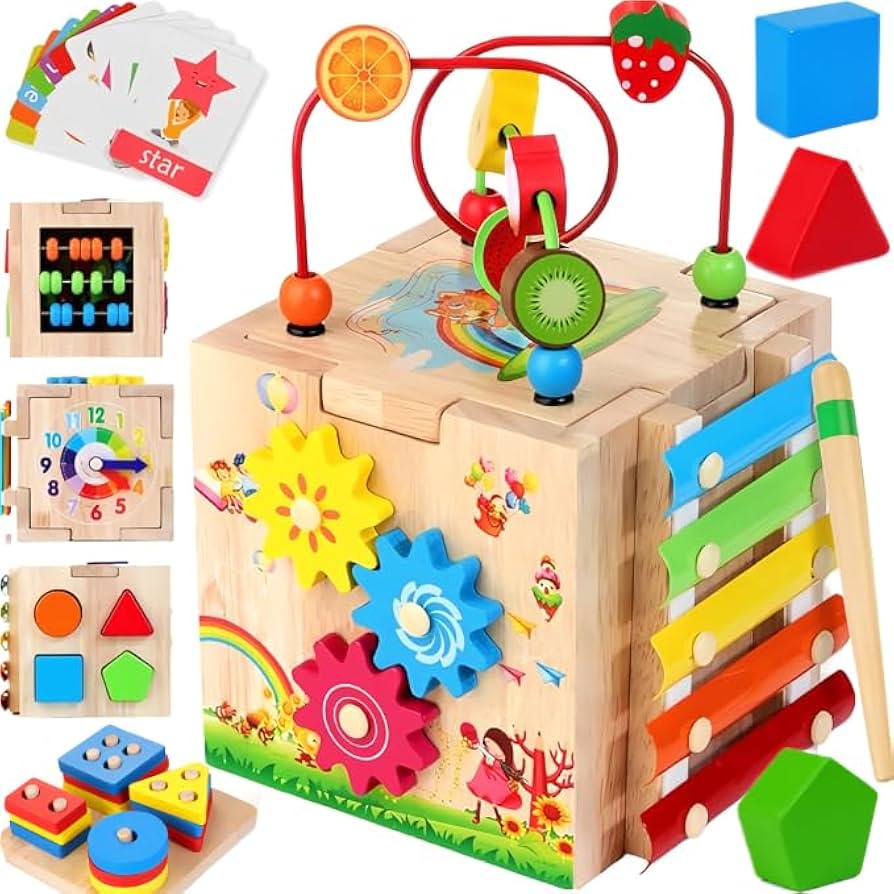
Wooden toys are a staple in Montessori play. They offer a warm, natural feel that plastic toys often lack. Because they are sturdy and safe, wooden blocks, stacking rings, and shape sorters invite your child to explore balance, coordination, and problem-solving.
Think about the last time your child built a tower with wooden blocks. The focus and creativity they showed prove how these toys promote concentration and fine motor skills.
Sensory Play Items
Sensory toys engage your child’s senses, which is crucial for brain development. Items like textured balls, sand trays, or water beads encourage tactile exploration and help children understand the world around them.
Have you noticed how your child reacts differently to smooth versus rough surfaces? Sensory play items help develop this awareness and improve focus, making learning more engaging.
Educational Puzzles
Educational puzzles challenge your child’s thinking and improve hand-eye coordination. Montessori puzzles often use natural images, letters, or numbers to connect learning with play.
When your child fits a puzzle piece perfectly, they’re not just playing—they’re mastering problem-solving and spatial skills that build a strong foundation for future learning.
Benefits For Child Development
Montessori toys are designed to support your child’s development in a natural and meaningful way. These toys focus on skills that matter most during early growth stages, making playtime both fun and educational. Understanding the benefits can help you choose toys that truly nurture your child’s potential.
Enhancing Cognitive Skills
Montessori toys challenge your child’s thinking and problem-solving abilities. Simple puzzles, sorting games, and stacking blocks help your child recognize patterns and make decisions independently.
These activities strengthen memory and concentration, skills that are essential for learning. Have you noticed how your child becomes more focused after playing with a toy that requires sorting shapes or matching colors?
Promoting Independence
These toys encourage your child to explore without constant adult help. When kids manipulate objects at their own pace, they build confidence and a sense of accomplishment.
For example, a child using a dressing frame to practice buttoning learns to manage daily tasks alone. Could giving your child more chances to try things on their own change how they approach challenges?
Fostering Creativity
Montessori toys often have open-ended uses, allowing your child to invent new ways to play. Blocks and natural materials inspire imagination far beyond fixed instructions.
When children create stories or build unique structures, they develop original thinking and problem-solving skills. What new ideas might your child come up with if given toys that encourage free play?

Credit: www.amazon.com
Age-appropriate Montessori Toys
Choosing the right Montessori toy means matching it to your child’s age and developmental stage. Age-appropriate Montessori toys support natural growth, helping kids build skills at their own pace. They encourage exploration without overwhelming your child, making learning feel like play.
Infants And Toddlers
Toys for infants and toddlers focus on sensory exploration and motor skills. Simple items like wooden rattles, soft blocks, and stacking rings allow little hands to discover textures and shapes.
These toys promote hand-eye coordination and encourage your child to explore safely. Have you noticed how your toddler’s curiosity sparks when they touch different materials? That’s the learning in action.
Preschoolers
Preschool Montessori toys challenge fine motor skills and problem-solving. Think of puzzles, shape sorters, and practical life tools like child-sized brooms or pouring sets.
These toys teach concentration and independence, helping your child gain confidence in everyday tasks. What everyday skill could your preschooler start practicing today with the right toy?
School-aged Children
Toys for school-aged kids shift towards creativity and complex thinking. Building sets, science kits, and art supplies encourage imagination and critical thinking.
They support expanding cognitive abilities and help children explore interests deeply. What new skill could your child develop with a Montessori toy designed for their age?
Choosing The Right Montessori Toy
Choosing the right Montessori toy helps support a child’s natural learning. The toy should match the child’s needs and encourage exploration. It must also be safe and last through many play sessions. Selecting carefully ensures the toy brings joy and growth.
Considering Child’s Interests
Every child has unique likes and curiosities. Toys that match these interests keep children engaged longer. Observe what your child enjoys. Choose toys that invite hands-on discovery. This connection makes learning fun and meaningful.
Safety And Durability
Montessori toys should be made from safe materials. Look for non-toxic, natural wood or BPA-free plastic. Avoid small parts that can cause choking. The toy must withstand rough play. Durable toys offer lasting value and safety for growing children.
Integrating Montessori Toys At Home
Integrating Montessori toys at home helps children explore and learn naturally. These toys encourage independence and creativity. They are simple, purposeful, and made from natural materials. Bringing them into your child’s play space supports hands-on learning and focused play.
Creating A Montessori Environment
Start with a clean, organized play area. Use low shelves to display toys neatly. Choose toys that match your child’s age and interests. Natural light and soft colors make the space calm and inviting. Encourage your child to pick toys and return them after use. This builds responsibility and respect for the environment.
Balancing With Traditional Toys
Mix Montessori toys with some traditional toys for variety. Traditional toys can offer fun and social play opportunities. Limit screen time and overly noisy toys. Focus on toys that promote problem-solving and creativity. Watch how your child interacts and adjust the mix as needed. Balance keeps playtime interesting and well-rounded.
Common Misconceptions
Many people have wrong ideas about Montessori toys. These ideas can stop parents from choosing the best toys for their children. Clearing up these myths helps parents make better choices. Montessori toys focus on learning and development, not just fun.
Montessori Toys Vs. Regular Toys
Montessori toys are made to teach specific skills. They help children learn through hands-on play. Regular toys often focus on entertainment and bright colors. Montessori toys use simple designs and natural materials. This simplicity helps kids concentrate and explore. Regular toys can sometimes overstimulate children with noise and flashing lights.
Montessori toys encourage problem-solving and creativity. Regular toys may not always support these skills deeply. The goal is learning, not just passing time. Montessori toys often match a child’s size and strength. This helps kids use their muscles and improve coordination.
Cost And Accessibility
Many think Montessori toys are very expensive. Some are costly but many are affordable or homemade. Quality Montessori toys last longer than many regular toys. Parents can also find simple items at home to use as Montessori toys.
Some stores and online shops sell Montessori toys. Schools and communities sometimes offer resources or guides. The key is to choose toys that fit the child’s needs. It is possible to find or create Montessori toys without spending much money.
Frequently Asked Questions
What Is A Montessori Toy?
A Montessori toy is designed to promote independent learning. It encourages creativity, problem-solving, and fine motor skills through hands-on play. These toys are simple, natural, and age-appropriate to foster a child’s development in a focused, educational way.
How Do Montessori Toys Benefit Children?
Montessori toys enhance concentration, coordination, and cognitive skills. They help children learn at their own pace and boost self-confidence. These toys encourage exploration and practical life skills, supporting holistic growth in a fun, engaging manner.
What Materials Are Used In Montessori Toys?
Montessori toys are typically made from natural materials like wood, cotton, and metal. These materials provide sensory experiences and durability. Avoiding plastic helps children connect with the environment and focus better on tactile learning.
At What Age Can Children Use Montessori Toys?
Montessori toys suit children from infancy to early school years. Toys are tailored to developmental stages, supporting sensory exploration and complex problem-solving. Early introduction helps establish strong learning foundations and independence.
Conclusion
Montessori toys help children learn by doing and exploring. They encourage creativity, focus, and problem-solving skills. These toys use natural materials and simple designs. Kids enjoy playing while developing important abilities. Parents and teachers find them useful for teaching. Choosing Montessori toys supports a child’s growth and independence.
It is a smart way to make learning fun and natural. Try including these toys in your child’s playtime today. They can make a big difference over time.